3D Clock Illustration for Creative Projects
A 3D clock illustration is more than just a visual element—it's a dynamic tool that can elevate the design and impact of your projects. Whether you're working on a website, app, presentation, or infographic, this high-quality 3D asset offers a unique way to convey time, motion, and creativity. With its detailed rendering and customizable features, it's a versatile choice for professionals across various industries.
What makes a 3D clock illustration stand out is its ability to add depth, realism, and visual interest. Unlike flat designs, 3D elements create a sense of space and movement that can engage viewers in new ways. This makes it ideal for projects where visual storytelling matters, such as marketing campaigns, educational materials, or interactive media.
Key Features of 3D Clock Illustration
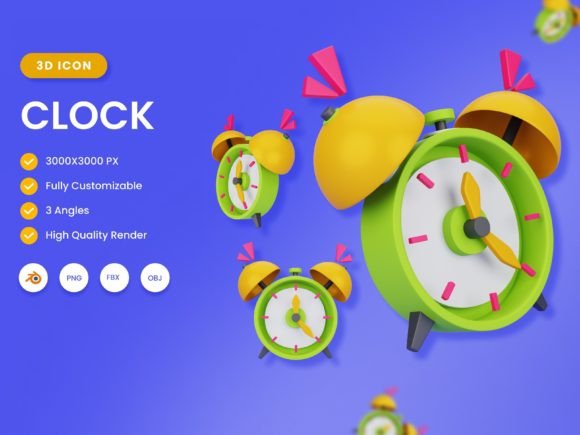
The 3D clock illustration comes with several features that make it both powerful and flexible. It’s available in a high-resolution format of 3000x3000 pixels, ensuring clarity even when scaled up. The file is fully customizable, allowing you to adjust colors, textures, and other details to match your project's needs. You'll also get three different angles, giving you options for how the clock appears in your design.
With high-quality rendering, the illustration maintains sharpness and detail, making it suitable for professional use. The availability of multiple file formats—such as BLEND, PNG, FBX, and OBJ—ensures compatibility with various design and animation software. This flexibility allows creators to integrate the illustration into their workflow seamlessly.
Creative Possibilities and Applications
The 3D clock illustration opens up a wide range of creative possibilities. For web designers, it can serve as a focal point on a homepage or be used as a background element to add sophistication. In mobile applications, it can be animated to show real-time updates, enhancing user interaction and engagement.
In presentations, a 3D clock illustration can help visualize time-sensitive data, such as project timelines, deadlines, or performance metrics. Its realistic look can make complex information more digestible and visually appealing. For analytical reports, it can act as a subtle yet effective visual cue to emphasize time-related insights.
Infographics benefit from the 3D clock illustration by adding a layer of depth and interest. It can be used to represent time-based statistics, such as trends over months or years, or to illustrate historical events in a visually compelling way. Website templates can incorporate the illustration to enhance the overall aesthetic and provide a consistent visual theme.
Adapting the 3D Clock Illustration for Different Goals
Designers and creators can adapt the 3D clock illustration to suit different goals and audiences. For example, a minimalist approach might focus on clean lines and neutral colors, while a more vibrant style could use bold hues and intricate details. The key is to align the illustration's appearance with the message and tone of the project.
For marketers, the 3D clock can be used in promotional materials to highlight time-sensitive offers or countdowns. In educational contexts, it can be part of interactive learning tools that teach about time, history, or science. Entrepreneurs might use it in branding or product packaging to convey reliability and precision.
Hobbyists and freelancers can experiment with the illustration in personal projects, such as digital art, animations, or social media content. Its versatility means it can be reimagined in countless ways, depending on the creator's vision and the platform's requirements.
Practical Tips for Using 3D Clock Illustration
To get the most out of the 3D clock illustration, consider the following tips. First, ensure that the illustration fits the overall design language of your project. If your work has a modern feel, choose a sleek and minimalistic version of the clock. If it's more artistic or whimsical, opt for a more stylized design.
When using the illustration in a layout, pay attention to placement and scale. A large, central clock can draw attention, while smaller variations can be used as accents or background elements. Consistency in color schemes and visual elements will help maintain a cohesive look across your project.
For animated projects, take advantage of the different angles to create smooth transitions or dynamic effects. This can add a layer of interactivity that enhances the user experience. Always test the illustration in different formats and resolutions to ensure it looks great on all devices and platforms.
Future Ideas and Suggestions
The 3D clock illustration is a powerful resource, but there's always room for improvement and expansion. Creators may want to see additional styles, such as retro, futuristic, or abstract versions of the clock. More file formats or integration options could also be beneficial for users working with different software tools.
Feedback from the community can help shape future updates. If you have ideas on how to enhance the 3D clock illustration, consider sharing them with the developers. Your input can contribute to making this resource even more valuable for creators around the world.